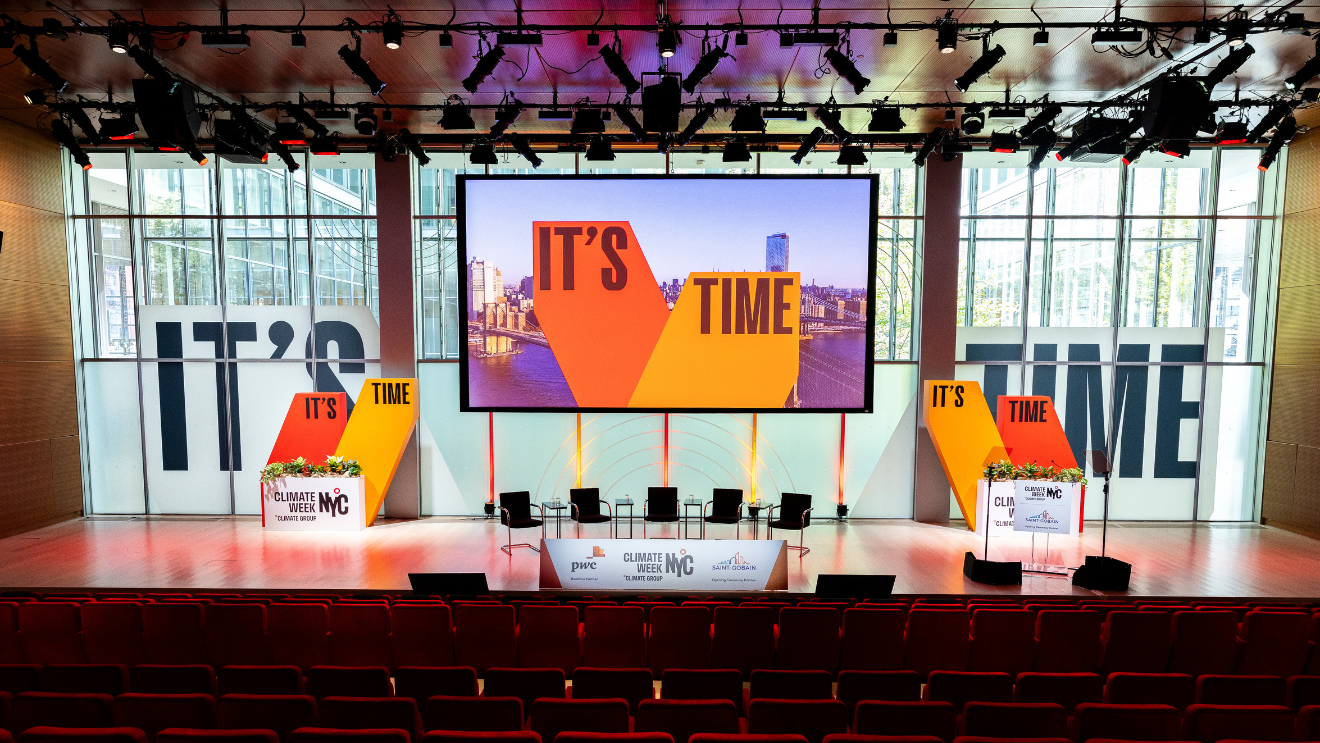
A week on from Climate Week New York and I’m still absorbing the insights and energy from the many panels and conversations I attended. The week itself was a filled with inspiration, with global brands, policymakers and thought leaders coming together to discuss the most pressing challenges of our time – and how we might work together to solve these. A few key reflections have stayed with me:
Profitability and Sustainability aren’t mutually exclusive
Throughout the week, a consistent message emerged: profitability and sustainability can – and should – go hand in hand. Whilst many brands recognise this alignment, they still often struggle to effectively communicate ‘the business case for sustainability’ to internal stakeholders and investors.
Leading brands such as IKEA, Kraft, and Seventh Generation shared insights into how they’ve successfully implemented sustainable practices that drive profitability. IKEA’s 24% carbon reduction has not only contributed to their environmental goals but also significantly lowered operational costs. Proving that sustainability initiatives can drive business efficiency. Kraft, meanwhile, is viewing sustainability as a long-term investment, with decarbonisation projects spanning 10 to 30 years. This forward-looking approach shows that sustainability isn’t just a short-term expense – it’s a commitment that can yield significant business value over time.
However, even with these examples of success, many companies are still learning how to articulate these benefits and secure broader buy-in across the organisation. This need to ‘build the business case’ for sustainability was a major theme. It’s one that will likely continue to shape conversations in the coming years. Interestingly, however, are the results of a recent global Ipsos survey which indicates that three in four (77%) believe companies do not pay enough attention to the environment. This highlights a communications problem. Organisations are implementing sustainability policies but not articulating their benefit or impact successfully. There is a clear need for simplified, engaging communications to secure buy-in both internally and externally.
Rage to Hope
A live recording of the Outrage + Optimism podcast captured the mood of the week perfectly. The conversation balanced messages that highlight the risks of inaction with the hopeful possibilities for a sustainable future. In this session, we heard Simon Steill, Executive Secretary of UN Climate Change, remind the audience that ‘bold climate action is good for everybody’s business’. This resonated deeply as a call for optimism grounded in urgency – reminding us that whilst we must acknowledge the current challenges of climate change, we have many of the tools and strategy to create meaningful change.
This shift from a sense of rage – stemming from the ongoing environmental crisis – to hope was also echoed in a session co-hosted by Purpose Disruptors, Clean Creatives, and Creatives for Climate. Here, we heard about the collaborative efforts of the creative and advertising industries to sever ties with fossil fuels and other high-polluting clients (a movement that we, at GOOD, are proud to be a part of). This collective approach is gaining momentum, as more agencies refuse to work with clients whose operations are misaligned with the drive toward sustainability. This is something GOOD believes in deeply. The session itself served as a powerful reminder that the creative industries hold immense influence in shaping cultural narratives and consumer behaviour. By redirecting this influence away from polluting industries and toward climate-positive initiatives, they can play a pivotal role in accelerating the transition to a sustainable future.
Action Speaks
Similarly, a sentiment echoed throughout the week was that we stand on the brink of the greatest economic transformation of our time. The need for action is urgent, and businesses must be at the forefront of that change. Whilst it is easy to fall victim to climate anxiety induced inaction, Climate Week served as a reminder of the reality that there are people, governments and businesses creating opportunities for sustainable transformation like never before.
Brands therefore must be bold in taking sustainable action, not just because it’s the right thing to do, but because it makes sound business sense.
Brands Want ‘Good’ Partners
During Tuesday’s Clean Creatives event, hosted at Burton, it became clear that brands are bringing their values into the RFP and procurement process. There’s a growing demand for partnerships where agencies and suppliers can demonstrate tangible commitments to environmental and social impact. Brands aren’t just looking for creativity or technical expertise – they’re seeking collaborators who align with their mission to drive positive change. This shift signals a deeper alignment of purpose between brands and agencies. One where sustainability, ethics, and values are no longer simply add-ons, but core to how partnerships are formed and maintained. This means agencies must be able to prove their credentials, not only through accreditations such as B Corp status or carbon reduction targets but through the real-world impact of their work.