
Universities in the UK are at risk of closure, with a staggering 40% facing budget deficits this year. A big driver of this is a continued decline in public funding, which is now at its lowest level since the 1990s. On top of this, a perfect storm of Brexit, Covid, industrial action, spiralling energy costs and inflation means that more universities are facing financial challenges.
All of this makes alumni giving more important than ever for UK universities. But unlike our counterparts in the USA, there isn’t an inherent culture of giving with alumni in the UK. The good news is that this looks set to change – last year alumni giving reached an all-time high, with £1.37 billion funds received. And for the top 10 performing UK institutions, new funds committed philanthropically rose to an average of 10.4% of overall turnover in 2022.
But we know that there’s more headroom for growth, as on average only 1.3% of alumni donate to a University.
So how can universities create a culture of giving? And what’s the role of marketing?
One of the biggest drivers of alumni giving will be their sense of connection to their University. In fact, research suggests that alumni who were more involved in student activities during their time at university are much more likely to donate later on. This shows the fostering a strong sense of community amongst students creates a lasting relationship with the university that can result in future donations. Of course, creating this community is not something that can be solved by marketing alone. However, marketing & fundraising teams can focus on building more meaningful relationships with alumni, encouraging them to give in future.
Here are 4 ways marketing can help:
1. Demonstrate impact
2. Creativity that captures hearts and minds
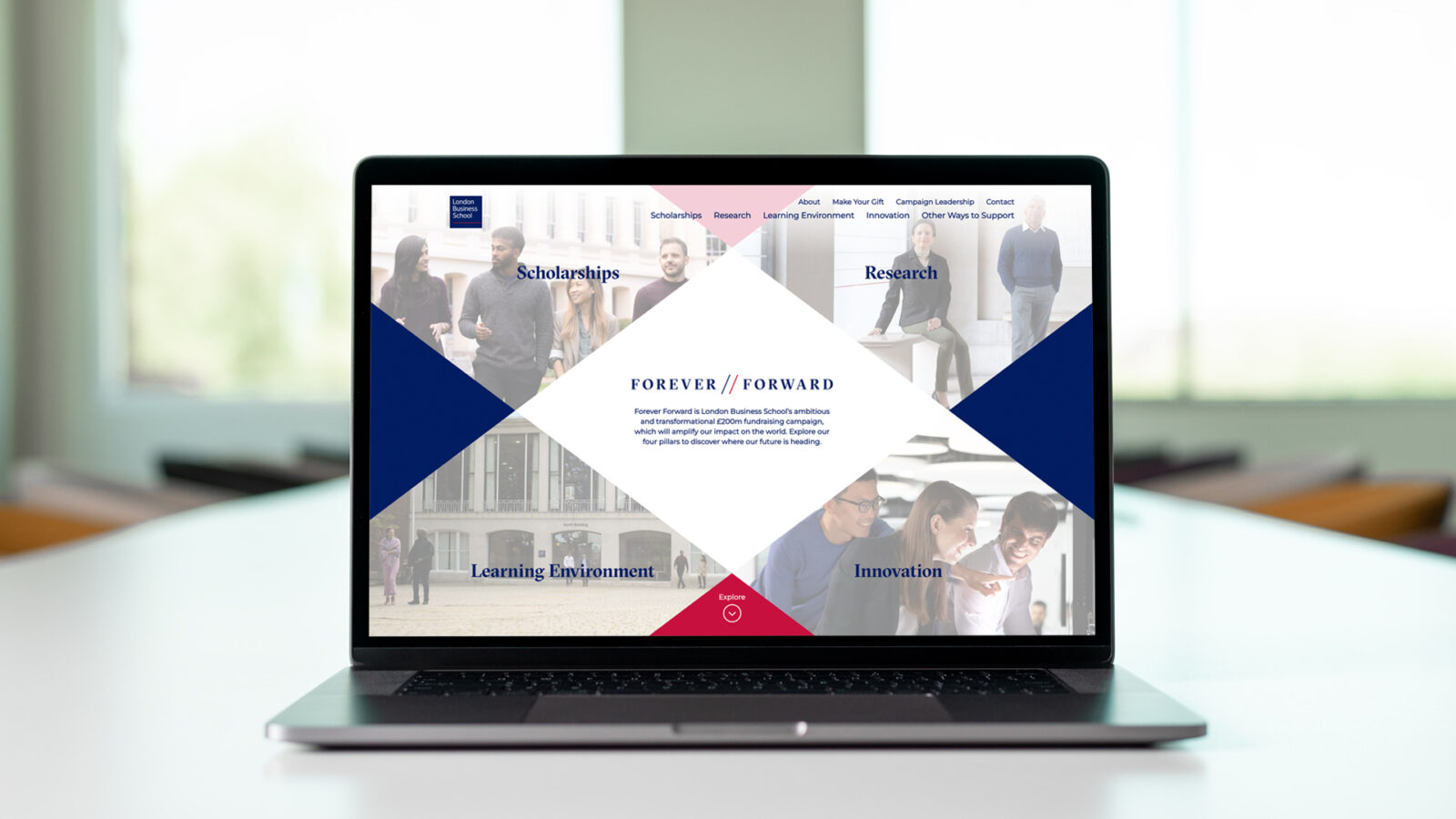
It’s not simply enough to have a clear case for support, we need to bring this to life creatively to capture attention and inspire giving.
The ‘Forever Forward’ campaign platform we developed for LBS highlights the schools role in driving business forward, whilst championing the never-resting spirit of the school and its community. To create visual stand out within the sector, the design instilled a sense of movement, optimism and progression, showing how LBS was moving forward.
A launch film bought this to life:
3. Engaging experiences
Financial constraints is one of the main barriers to alumni giving. This is particularly true for younger cohorts who have a more transactional view of higher education – unlike previous generations they had to pay for their tuition, so why should they give back? Creating experiences that engage alumni first and foremost is key to widening the pool of potential prospects, who may go on to give a high value gift or legacy in years to come.
The Forever Forward campaign launched with an immersive event that encouraged alumni, staff and the wider business community to explore and discuss how LBS can drive business forward.
4. Invest in the journey
In comparison to counterparts in the USA, UK universities don’t as overtly ask for money. Digital fundraising is key as many alumni will not be coming back to in person events at their universities. A benchmarking study found that higher education institutions send far fewer emails than other relationship-based organizations. Whilst email could be discounted as a channel that’s easy to ignore, alumni will already have a personal relationship with their university and so investing in the onward digital journey is key to deepening that connection over time.
Ultimately, alumni giving can help secure the future of many Universities, but only if we can prove their positive impact to wider society and show that donating to higher education is an important cause.
If you’re interested in finding out more, please get in touch with GOOD at hello@goodagency.co.uk