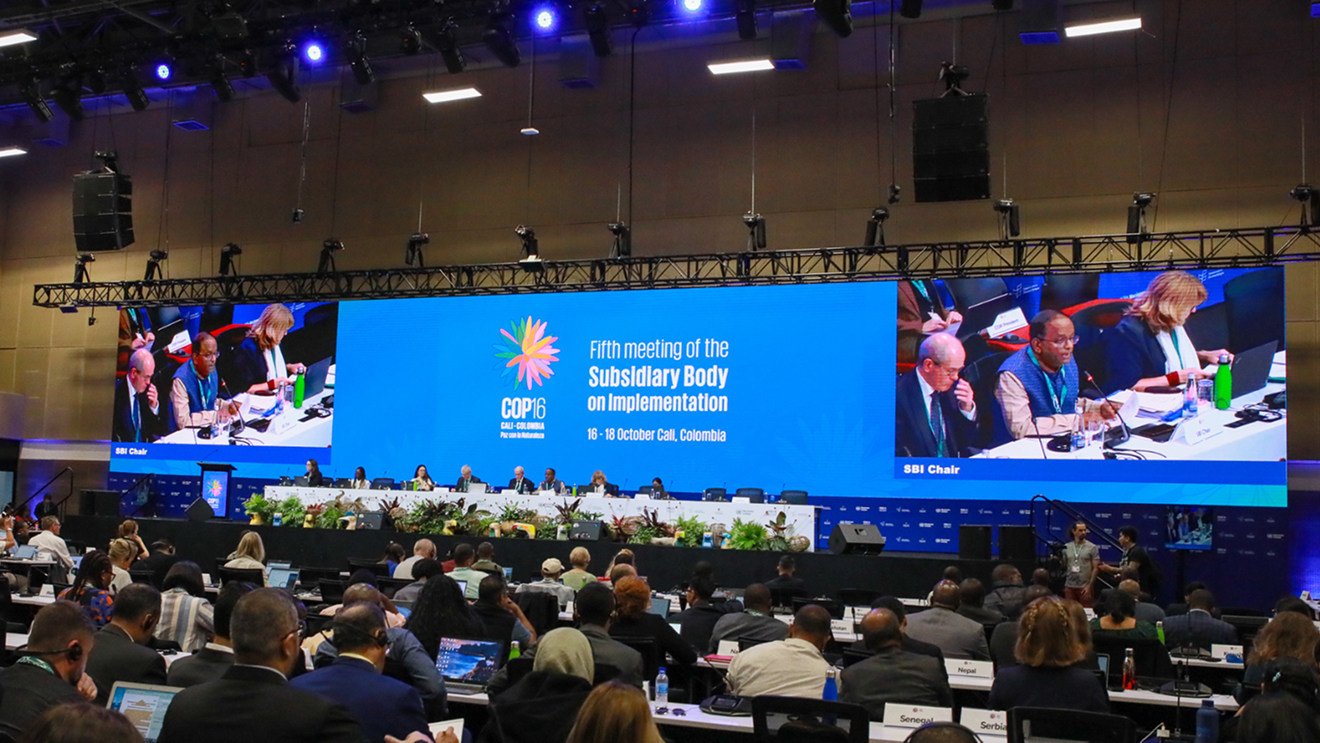
The headline from the UN biodiversity summit, COP 16, last week was that global diversity has declined by 70% since 1970, the very biodiversity that every person on this planet relies on for their food, drink and clothing.
Last week, The UN also reported on the Emissions Gap, which “indicates that if only ‘current policies’ are implemented, the world could warm by up to 3.1C.
“This would be ‘catastrophic’ for the world according to the UN, leading to dramatic increases in extreme weather events including heatwaves and floods.”
It is estimated that a third of all supply chains are under such critical pressure from the climate crisis and biodiversity loss that they are likely to fail within ten years.
Yields are declining on less available fertile land, water scarcity is turning vast areas of land unproductive, essential raw materials are being depleted at unsustainable rates, the climate is having a devastating impact on workforce productivity, climate events are having massive disruption to supply chains, and the cost of insuring business against climate disruption is becoming unaffordable. On top of this, climate and biodiversity legislation and regulation are adding significant cost to business.
This means higher prices, greater competition for resources, less choice, and in some cases, no choice for businesses to offer clients and consumer and ultimately a decline in living standards. All because we have not and are not acting quickly enough or at a scale required to reverse climate change.
Tackling and ultimately reversing climate change needs everyone’s attention and effort, and business arguably has the greatest role in reversing the damage to the climate and biodiversity.
All businesses need to transition to become sustainable at least, and nature positive at best. Even though it is now clearly a commercial imperative, far too few are taking the required action.
So why are so many business leaders, especially in developed countries, not actively or seriously engaging in the fight to reverse climate change and biodiversity loss at the scale and speed required for their long-term commercial interest as well as those of the planet?
Bad agents continue to peddle lies and half-truths. They are winning the communications battle and giving some business leaders a rotten crutch to lean on by undermining the reality of what is happening and what needs to be done.
Transitioning a business to become sustainable and, ideally, nature positive is a massive task that requires the support of every stakeholder, from staff, everyone in the supply chain, clients/customers, investors and policymakers to the wider community a business depends on; everyone has a vital role. Especially as sustainability regulation is coming in faster than businesses can adapt to.
Marketing and communication can be an extraordinarily powerful force for good when applied correctly; it can make the complex simple and compelling, influence attitudes and persuade people to play their part in fundamentally changing a business’s operation to become more sustainable and, ideally nature, nature-positive.
But all too often, communication to stakeholders about transition is uninspiring and technical, fails to connect with the audience and has no clear role for the individual.
Sustainability messaging has become detached from the business’s marketing and communication function. In order to have an unignorable impact and communicate effectively, brands and businesses need to find a balance between conveying sustainability messaging and using highly effective and persuasive human storytelling to cut through. The motive to engage needs to be both personal and aligned to a business’s purpose.
Without the right narrative and cohesion between marketing, internal and external comms and sustainability teams, transition and sustainability communications are at risk of being ignored or deprioritised.
Marketing and communications have a vital role to play in accelerating and amplifying an organisation’s transition to become financially, environmentally and socially sustainable.
The need is clear, we have the skills and in many case the solutions, we now need to apply them effectively. Great marketing and communications has a vital role in changing the unsustainable story we are currently living.
Photo by IISD/ENB | Mike Muzurakis