All charities in fact, already rely on the support of people with all kinds of disabilities. 1 in 4 disabled people have given a regular gift to charity in the last 3 months and 5% of disabled people have pledged a gift in their will to a charity.
It’s important charities understand they have both a financial and moral imperative to ensure inclusive representation across all their communication. This not only underscores the relevance of charities but would also help differentiate your organization from in the crowded market.
Here’s our 3 helpful tips for charities seeking to include donors with disabilities.
Intersectionality
Identities are not one-dimensional; individuals are complex, this is the basic premise of intersectionality. Asian-American Disability Activist Alice Wong once said, “The many identities you hold, and your lived experiences are not in conflict with each other; they make you sharp, whole, and extraordinary.” Society presents multiple systemic challenges to people with disabilities, including in healthcare, leisure and employment—often compounded by factors such as race, gender, or socioeconomic status. Whatever your mission is to improve the world, it will not be complete if you have not considered the inclusion of people with disabilities.
Collaboration
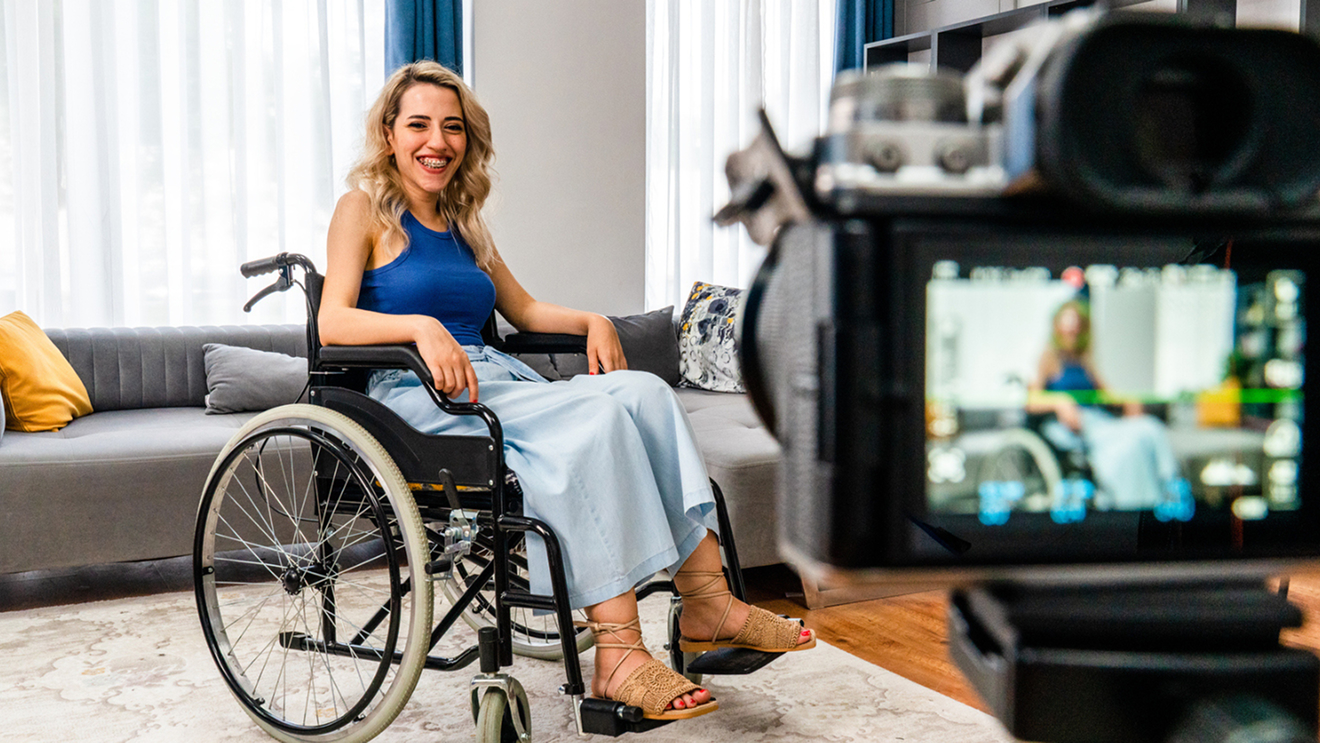
To achieve authentic representation of a community you must work together. As the mantra goes – nothing about me without me. Collaboration ensures the small details of people’s lives are captured, understood and seen – from the mobility aids someone uses or the varied ways being use accessible technology.
Accessible Experiences
Inclusive design means that experiences are designed as accessible by default, giving the simplest user experience to the widest group of people – rather than creating separate accessible experiences for people with disabilities. Digital accessibility should be a priority for charities. Research has shown that 75% of users with disabilities will abandon a website if it’s too difficult to navigate, possibly leading to a loss of opportunity. This principle applies to all communications, whether it’s TV, direct mail, or events. By removing barriers and embracing disability experiences, charities can enhance engagement from all users.
Finally, a shift towards an inclusive society can seem daunting because there is so much today – but we would encourage all charities to begin the journey and take your first steps towards disability inclusion. We look forward to a time when people with disabilities see themselves represented in communications and it becomes normal, not the surprising exception.