Reasons for despair and hope
Britons are pessimistic about the lives and prospects of future generations, with 1 in 2 feeling more hopeless than hopeful about their futures. The environment, housing market, the nation’s well-being, and the economy, were also scored as reasons to be more hopeless than hopeful.
Amidst this bleak outlook, there are glimpses of optimism. Sustainable business practices emerge as the second highest reason for hope, with 1 in 2 expressing optimism about this area. Outranking this is improvements to technology and innovation.
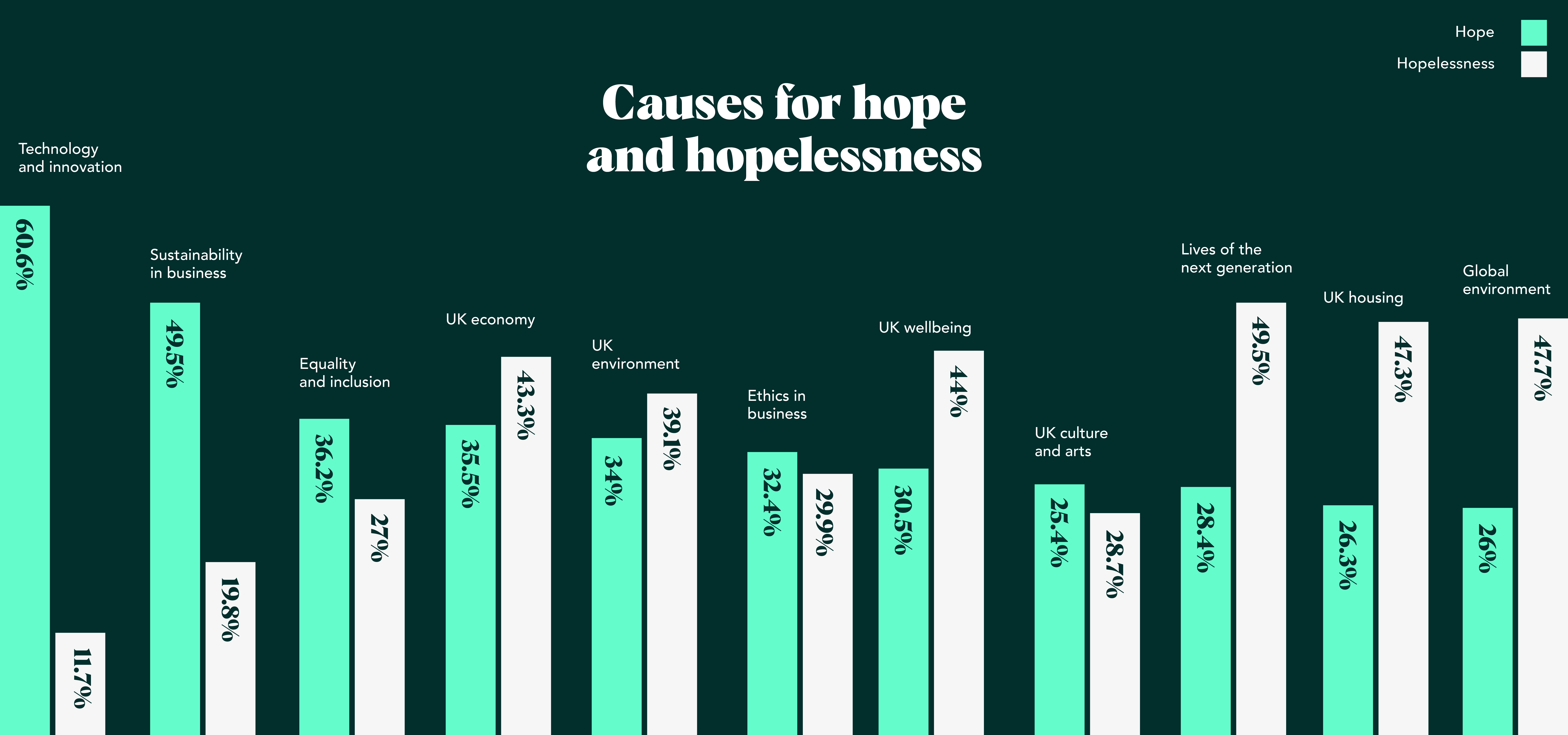
Against a myriad of reasons for despair, it is evident that tangible solutions such as tech, innovation and sustainable business practices are igniting hope for the future. This has positive implications for businesses authentically engaged in these areas.
A nation divided
A closer analysis of the data reveals that the UK stands divided, with 42% expressing hope and 38% feeling hopeless. This underscores broader societal divisions, reflecting vastly different lived experiences across Britain.
Generational differences
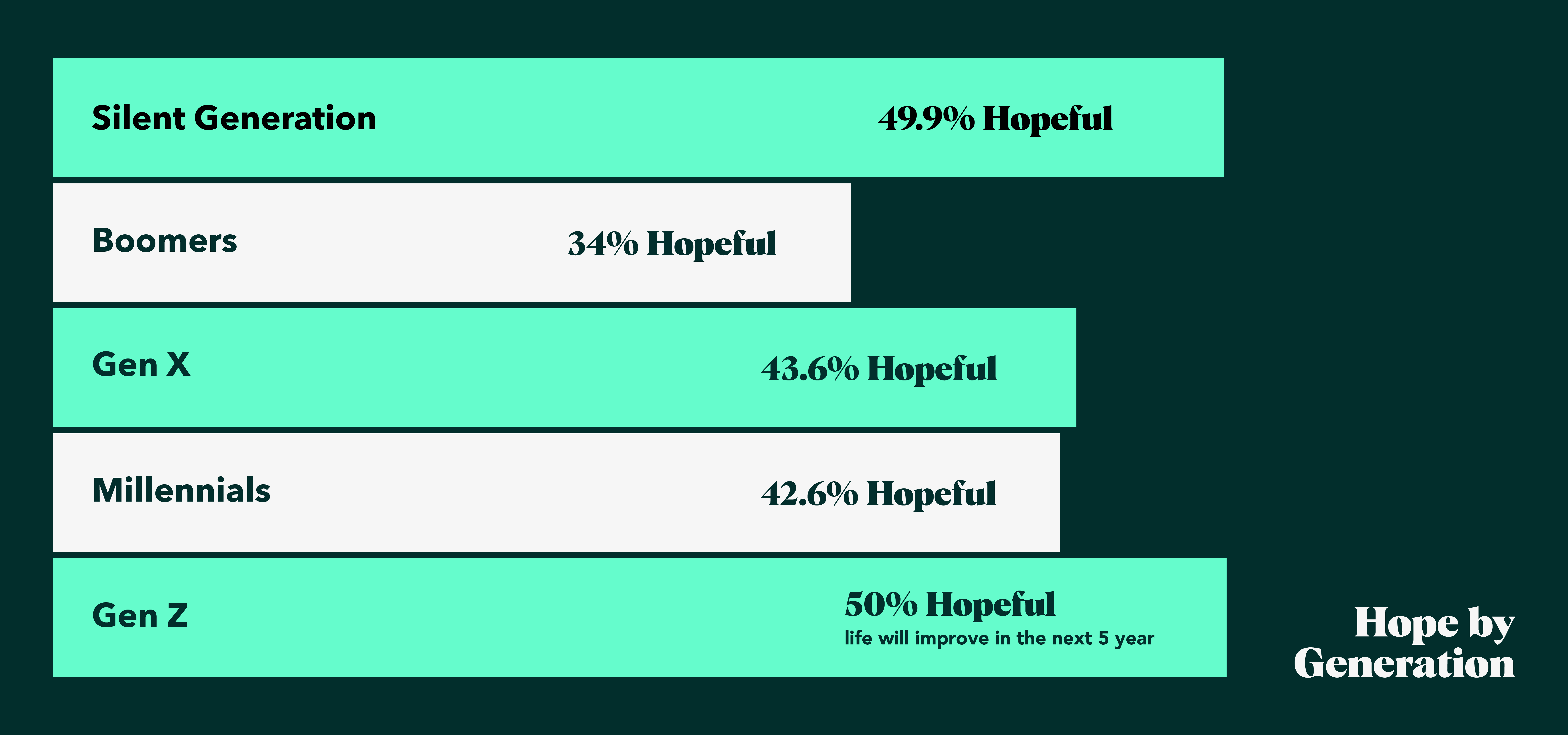
The significance of age and life-stage emerge as a key differentiator, with Gen Z being both the most hopeful (50%) and the least hopeless (15%) among surveyed generations, despite their heightened concerns about environmental and social issues. This suggests a correlation between hopefulness and youthfulness.
The remaining generations track a similar trend to the ‘happiness U-cuvre’, wherein younger and older adults are typically more hopeful than those in mid-life.
Personal versus Public reasons for hope
Our survey revealed an interesting observation that people are more hopeful about aspects of their personal lives, such as family, finances and the home compared to their outlook on the public realm – socialising, work and local community. This presents an important opportunity for brands to step in and foster hope within our shared public life.
In Conclusion
The findings of our research underscore the critical need for brands to offer tangible solutions to the challenges facing society. As Britons grapple with a mix of hope and despair, it is evident that consumers seek reassurance from brands that their consumption choices contribute positively to the future and won’t cost the earth. With societal divides and generational differences shaping perceptions, brands should prioritise offering concrete solutions that address both public and private concerns.
In embracing this challenge, brands can position themselves as agents of positive change, driving hope and a sustainable tomorrow.
What’s next
These initial insights will guide our upcoming in-depth audience research. We will demonstrate how brands can effectively communicate ‘hope’ to their consumers. Register now to be notified when these results are published.