Been on a factory visit recently?
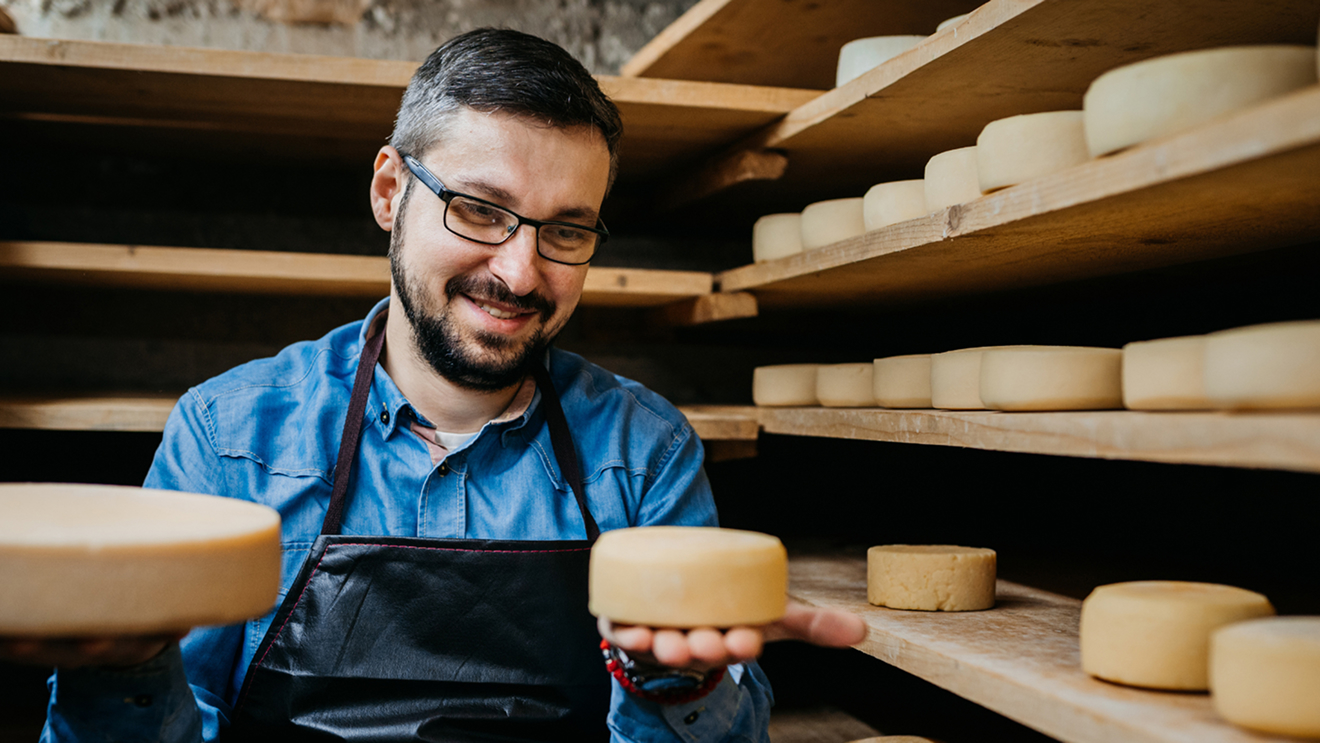
You don’t hear of them much these days. I’m not even sure they’re still a thing. Time was when you couldn’t really get cracking on a brief until you’d nipped off to Melton Mowbray to spend a day in the company of people who live and breathe cheese.
And quite right too.
To truly understand the car, beer or kitchen appliance, you need to see how it’s made, where it’s made and meet the folk who made it.
Factory visits give you stuff you won’t find on Google. Or even in the brief. Truths that come from deep within the bowels of a business. Quite often from those living, cheese breathing people.
The knowledge that the stitching has enough tensile strength to land a marlin.
That the North Sea sits 90ft behind the brewery.
That the welding is strong enough to stop the car falling on the writer.
Improbable insights that may have stayed forever locked in the minds of those that know.
But even though at GOOD we tell more people stories than product ones, the principle remains the same. Whether it’s a Crisis Skylight Centre receptionist or a mud-obsessed NOC scientist, if you want to tell human stories, it really helps to speak to humans.
To find the most compelling facts, you need to put yourself out there. To meet, to talk, to interrogate. To noodle truths from the ones who live them. And if you’re going to tell someone’s true story, you owe it to them to tell it truthfully. Centre their experience. Cast authentically. Get the details right.
And it’s worth it for all sorts of reasons. Because when you accurately and truthfully represent people, you unearth unheard language and untold stories that are unique and powerful.
This isn’t rocket science of course (even when it’s mud science) and I’ve no doubt that lots of creatives still value the things they see with their own eyes and hear with their own ears. But I get the feeling we as an industry are immersing ourselves less in real life and more in the stuff that imitates it. And the more artificial our approach, the more superficial the work.
But all is not lost. Production line nuggets. Obscure, unspoken facts. Unique memories and experiences. They’ve not gone away. They’re just waiting for a curious creative to come along and dig them out.
So, curious creatives, I urge you to find time for Bob on the front desk. Enjoy a chinwag with Maisie in product development. And while you’re at it, find out in intimate detail how they make the thingamabobs, the whatchamacallits and maybe even the oojamaflips.
Because when you truly get under the skin of the products and the people, I promise that the work that you end up making will be more insightful, more original and dare I say it, more creative.
Which is why I value real-world intelligence over the artificial kind every time.
And why I’m always happy to jump on a train to Melton Mowbray.